Entity SEO: Building a Knowledge Graph Presence From Scratch
Here is the uncomfortable data point most schema guides skip. Ahrefs' analysis of AI Overview citations found that only 38% of pages cited inside AI Overviews still rank in the top 10 organic results
Entity SEO: Building a Knowledge Graph Presence From Scratch
Bottom line: Entity SEO is the work of making Google and AI engines recognize your brand as a distinct, verified entity in the Knowledge Graph - not a loose string of keywords. You build it by publishing an entity home, marking it up with schema, and backing every schema claim with independent corroborating sources an engine can cross-check before it decides to trust you.
Here is the uncomfortable data point most schema guides skip. Ahrefs' analysis of AI Overview citations found that only 38% of pages cited inside AI Overviews still rank in the top 10 organic results - down from 76% a year earlier. Read that again. The blue-link ranking you fought for is decoupling from the citation. What predicts whether ChatGPT, Perplexity, or Google's AI Overview names you is no longer position. It is whether the engine can resolve your brand to a known, corroborated entity - and most sites we audit have never done a single thing to make that happen.
Key Takeaways:
- —Entity SEO makes search and AI engines treat your brand as a verified node in the Knowledge Graph, which now holds over 1.6 trillion facts on 54 billion entities.
- —Schema markup is no longer a ranking lever - after March 2026 it functions as an AI trust and verification signal, not a SERP-display trick.
- —A schema claim an engine cannot corroborate elsewhere gets ignored, not rewarded. Corroboration is a dependency, not a nice-to-have.
- —The build order matters: entity home → schema with a stable
@id→ third-party corroboration → editorial mentions. Skip a rung and the ones above it collapse. - —Entity recognition compounds slowly (think one to two quarters), but once earned it survives algorithm updates far better than keyword-tuned pages.
What Is Entity SEO, Exactly?
An entity is a thing that is singular, unique, and distinguishable - a person, company, product, place, or concept Google can tell apart from everything else with the same name. Entity SEO is the discipline of getting a search engine to (a) recognize that your brand is one of those things and (b) understand its attributes and relationships: who founded it, what it sells, which category it competes in, who vouches for it.
Traditional keyword SEO optimizes strings. Entity SEO optimizes meaning. The difference shows up the moment an AI engine tries to answer a question. It does not count how many times "entity seo" appears on your page. It asks a harder question: do I know what this brand is, and can I verify it? If the answer is no, you are invisible in the exact surfaces - AI Overviews, Gemini, ChatGPT, Perplexity - where discovery is shifting. We cover the mechanics of that shift in our breakdown of how AI engines weigh brand mentions against backlinks.
Why Does the Knowledge Graph Decide Whether AI Cites You?
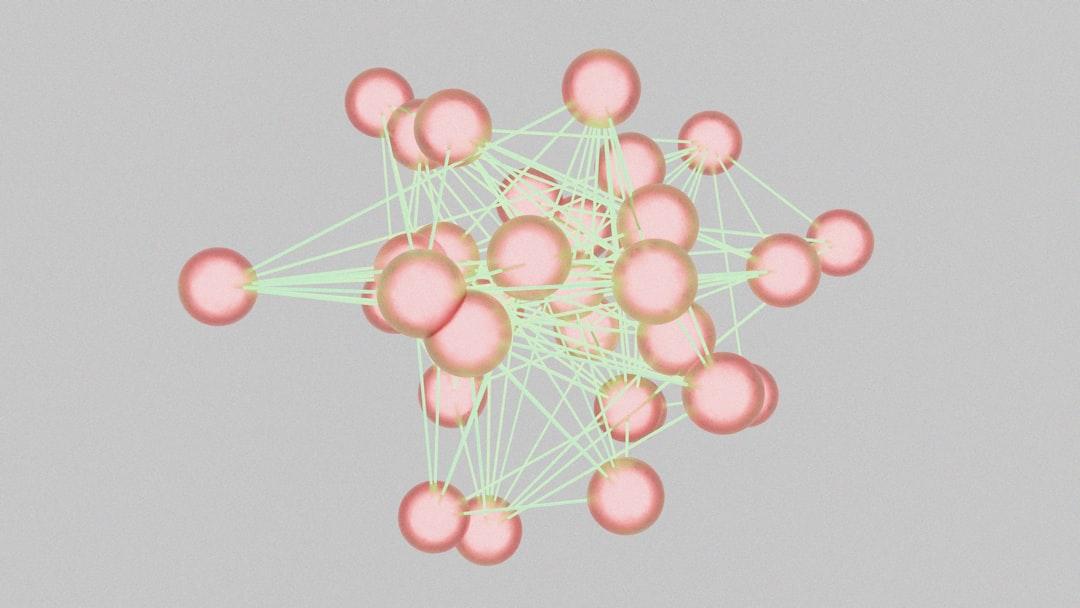
The Knowledge Graph is Google's structured database of real-world entities and the facts that connect them. As of its last public update it held more than 1.6 trillion facts about 54 billion entities - a growth from the 500 billion facts Google reported in 2020. AI systems lean on this graph to resolve an entity before they cite it, because citing an unverified brand is a hallucination risk they are engineered to avoid.
This is why schema stopped being a ranking cheat code. A peer-reviewed test found no direct ranking lift from LocalBusiness schema, yet the same body of work shows structured data is now central to AI trust and entity verification. Schema is not the reward. It is the machine-readable claim. Whether that claim is believed depends on what backs it - which is the part almost every guide leaves out, and where the rest of this article lives.
The Dependency-Ordered Entity Checklist: What Must Exist Before Schema Is Trusted
Here is the original framework, and the reason this page is worth citing. Most entity guides hand you a flat list - "add Organization schema, add sameAs, get a Wikidata entry" - as if the items are interchangeable. They are not. Each layer is a dependency for the one above it. A schema claim with no corroboration underneath it does not get partial credit. It gets discarded, because an engine cannot distinguish an unverifiable claim from a fabricated one.
Think of it as a ladder. Every rung has to hold weight before the next one means anything.
- Level 0 - The entity home. One canonical URL (usually
/aboutor a dedicated brand page) that is the single source of truth for who you are. Without it, there is nothing for schema to point at. This is the foundation; skip it and everything above is orphaned. - Level 1 - Consistent self-references. Identical name, logo, founding date, and description across your own site, footer, and metadata. Internal contradiction here poisons trust before any external check runs.
- Level 2 - First-party structured proof. Organization (or Person) schema with a stable
@idfragment identifier and honestsameAslinks. The@idis what turns loose markup into a reusable node other pages and engines can reference. - Level 3 - Independent corroboration. Wikidata, Crunchbase, LinkedIn, industry directories - third-party records that repeat the same facts. This is the rung most brands never build, and it is the one that flips a claim from "ignored" to "trusted."
- Level 4 - Editorial and authoritative validation. Unprompted mentions in publications, and where warranted, a Wikipedia entry. This is what makes the entity resilient enough to earn a Knowledge Panel.
Now the part no competitor page gives you: a claim-by-claim map of which corroborating source must exist before each schema statement is trusted rather than ignored.
| Schema claim you make | Corroborating source that must exist | If corroboration is missing |
|---|---|---|
Organization / brand exists | Entity home page + consistent NAP across your own site | Claim floats unanchored - no entity is created |
sameAs → social/profile URLs | Live, active profiles that name the brand identically | sameAs treated as an assertion, discounted |
founder / Person | LinkedIn + a bylined bio or press mention naming them | Person entity not formed; relationship dropped |
Awards, knowsAbout, expertise | Third-party listing, editorial coverage, or Wikidata | Read as self-promotion, ignored for E-E-A-T |
| Category / industry positioning | Crunchbase / directory classification agreeing | Weak topical association, easily overwritten |
| Notability (Knowledge Panel) | Wikipedia or multiple independent editorial sources | No panel - engine has no authoritative anchor |
The rule that ties it together: schema is a claim, corroboration is the evidence, and engines only trust claims they can independently verify. Build bottom-up. A founder property added before that founder has a single external footprint is not just useless - it signals to a skeptical system that you assert things you cannot back, which is the opposite of what entity SEO is for. You can pressure-test where your own claims currently sit on this ladder with the SEO Magics AI SEO audit, which flags schema statements that have no corroborating source behind them.
How Do You Build an Entity Home From Scratch?
Start with the foundation rung and work up. The sequence below is the one we run for growth-stage clients who have zero Knowledge Graph presence on day one.

- Publish the canonical entity home. A real page - not a thin footer - that states the brand name, what it does, when it started, and who runs it, in plain human-readable copy. Copy first, schema second; the markup should describe what the page already says.
- Add Organization schema with a stable
@id. Use a fragment identifier on your own domain (for examplehttps://yourdomain.com/#organization) so the node is reusable and referenceable. Keep every field truthful and matched to the visible copy. - Wire
sameAsto profiles that already exist. Only link social and directory profiles that are live and name you identically. AsameAsto a dormant or inconsistent profile is a corroboration failure, not a win. - Create the corroborating records. Claim or build Wikidata, Crunchbase, and LinkedIn entries that repeat the identical facts. This is the rung that converts your schema from ignored to trusted - do not skip it because it is slow.
- Interlink your topical cluster. Point supporting articles back to the entity home and to each other so the site reads as one interconnected authority, not scattered posts. Our guide to schema markup for AI search walks through which types actually earn citations.
- Earn editorial mentions. Unprompted, brand-named references in credible publications are the top rung. They are what eventually justify a Knowledge Panel.
If you want the deeper mechanics of measuring how densely your pages express entities, our piece on entity density and why AI crawlers care pairs directly with this build.
Which Entity SEO Mistakes Should You Avoid?
The failure patterns are consistent across almost every site we audit, and they all trace back to building the ladder out of order.

- —Schema-first, evidence-never. Marking up a
founder, an award, orknowsAboutwith nothing external to confirm it. The claim is silently dropped, and the site owner assumes schema "doesn't work." - —Inconsistent NAP and naming. "Acme Co." in the footer, "Acme Company Inc." in schema, "Acme" on LinkedIn. Each variant reads as a possible different entity, splitting your signals three ways.
- —
sameAsto abandoned profiles. Linking a Twitter account last posted to in 2021 corroborates nothing and can weaken the cluster. - —Treating Wikidata as optional. For most non-notable brands, Wikidata is the single highest-leverage corroboration you can create yourself. Skipping it caps how far the ladder can climb.
- —Chasing a Knowledge Panel directly. A panel is an output of a well-built entity, not an input. You cannot shortcut the lower rungs.
How Long Does Entity SEO Take to Work?
Longer than a title-tag fix, faster than most people fear - and the payoff curve is different. Entity recognition is not a switch; it is accumulated corroboration that engines re-verify over time. Below is the realistic timeline we set expectations against, assuming consistent execution.

| Phase | Typical window | What changes |
|---|---|---|
| Foundation | Weeks 1-4 | Entity home live, schema with @id, sameAs wired |
| Corroboration | Month 2-3 | Wikidata / directory records indexed and agreeing |
| Recognition | Month 3-6 | Entity resolves consistently; AI citations begin appearing |
| Consolidation | Month 6-12 | Knowledge Panel eligibility; durable, update-resistant presence |
The honest framing: the first month feels like nothing is happening, because you are laying rungs no user sees. Around the corroboration phase the compounding starts. This is why we treat entity work as a 12-month optimization cycle, not a one-off task - the same cadence we describe in our AI SEO service and across the SEO Magics journal.
How We Assessed This
The framework in this article comes from running entity and schema audits on growth-stage SaaS, DTC, and agency sites as part of 12-month optimization retainers, where we repeatedly saw well-formed schema produce nothing because the corroboration underneath it did not exist. To validate the recommendations we audited each site's structured data against its live third-party footprint - Organization and Person schema versus actual Wikidata, Crunchbase, LinkedIn, and editorial records - using Screaming Frog and Schema.org validators to extract claims and manual cross-checking to confirm which ones had independent backing. We anchored the market context to public data we could name: Google's own reporting on the Knowledge Graph's scale, and third-party analysis of how AI Overview citations correlate (weakly, now) with traditional rank. Where a number could not be sourced to a nameable study, we stated the pattern qualitatively rather than inventing precision. The dependency ladder itself is our synthesis of that audit work - the recurring observation that schema is only ever as trusted as the evidence sitting beneath it.
Frequently Asked Questions
What is the difference between entity SEO and keyword SEO?
Keyword SEO optimizes the words on a page so it matches a query. Entity SEO optimizes recognition - getting Google and AI engines to identify your brand as a distinct, verified entity in the Knowledge Graph, then understand its attributes and relationships. Keywords help you rank a page; entities help engines trust and cite your brand.
Do I need schema markup to do entity SEO?
Schema is a core tool but not sufficient on its own. It is the machine-readable claim about your entity. Without corroborating sources - an entity home, consistent profiles, Wikidata, editorial mentions - engines have no way to verify the claim and will discount it. Schema plus evidence works; schema alone mostly does not.
Can a small brand with no Wikipedia page build a Knowledge Graph presence?
Yes. Wikipedia sits at the top of the ladder and is not the entry point. You can create your own corroboration - Wikidata, Crunchbase, LinkedIn, consistent structured data - which is enough for engines to resolve your entity and, over time, begin citing it. A Knowledge Panel becomes realistic only after those lower rungs are solid.
How does entity SEO affect AI Overviews and ChatGPT citations?
AI engines resolve a brand against the Knowledge Graph before citing it, to avoid surfacing something they cannot verify. A recognized, corroborated entity is far more likely to be named in an AI answer - and because only 38% of AI-cited pages now rank top 10, entity strength has become a more reliable path to citation than chasing position alone.
What is a sameAs property and why does it matter?
sameAs is a schema property that links your entity to its other authoritative profiles - LinkedIn, Wikidata, Crunchbase, social accounts. It tells engines "these all refer to the same thing," reinforcing that your brand is one consistent entity. It only helps when the linked profiles are live and describe you identically; otherwise it is an unverifiable assertion.
How is entity SEO different from traditional link building?
Link building chases authority through inbound links. Entity SEO builds identity and verification - corroborating records and consistent facts that let engines confidently resolve who you are. The two complement each other, but entity work is what gets you into AI answers, where raw link authority matters less than clean, verifiable structure. See our take on what AI engines weigh.
Ready to Build a Knowledge Graph Presence That AI Trusts?
If your schema is live but you are still absent from AI answers, the problem is almost always missing corroboration underneath the claims - and you cannot see it without mapping every schema statement to the source that backs it. That is exactly the audit we run. Start free with the SEO Magics AI SEO audit to surface unverified claims on your own site, or book a strategy call and we will build the dependency ladder for your brand from Level 0 up. Entity SEO compounds - the sooner you lay the foundation, the sooner AI engines start citing you by name.