How AI Assistants Pick Local Businesses to Recommend
Physical distance had almost no relationship with which business an AI assistant recommends. In Local Falcon's analysis of Google AI Overviews, proximity showed a correlation of roughly 0.001 with AI

How AI Assistants Pick Local Businesses to Recommend
Bottom line: In local AI search, assistants like ChatGPT, Perplexity, and Google's AI Overviews don't rank the nearest business - they recommend the one that the most trusted sources agree on. Distance and map-pack position barely factor in. What decides the pick is aggregator consensus: matching name, reviews, and facts repeated across directories, review platforms, and forums.
Physical distance had almost no relationship with which business an AI assistant recommends. In Local Falcon's analysis of Google AI Overviews, proximity showed a correlation of roughly 0.001 with AI answer inclusion - statistically zero. That single number breaks the mental model most local businesses still run on. The map pack rewards a tight radius and a well-optimized profile. Local AI search rewards something else entirely: agreement across the open web.
Key Takeaways:
- —Map-pack rank and proximity barely predict AI recommendations - Local Falcon measured a ~0.001 distance correlation with AI Overview inclusion.
- —Consensus across independent sources is the real signal. Assistants corroborate your name, address, hours, and services across directories before they'll name you.
- —Reviews are close to a prerequisite: in a study of 10,000 local businesses, those found by both ChatGPT and Perplexity averaged 133 Google reviews versus 11 for the invisible ones.
- —The sources that carry consensus differ by engine - ChatGPT leans on Wikipedia and established directories, Perplexity on Reddit and Q&A threads, Google AI Overviews on Business Profile plus reviews.
- —AI is now a mainstream discovery channel: BrightLocal found AI tool usage for finding local businesses jumped from 6% to 45% in a single year.
What Is Local AI Search, and How Is It Different?
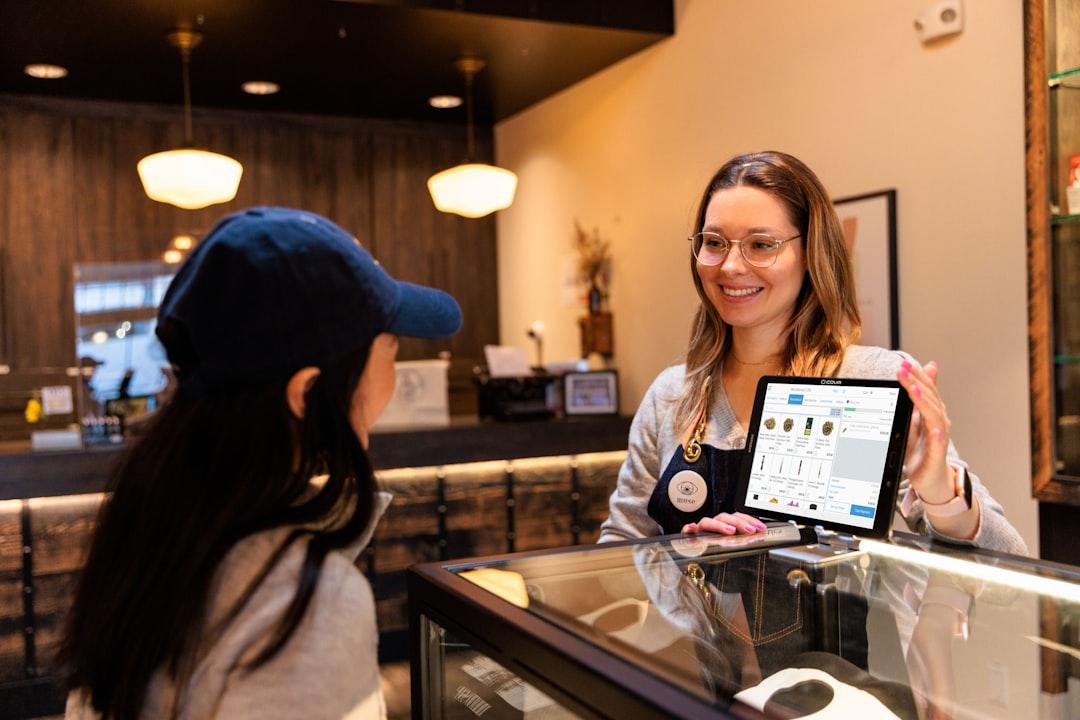
Local AI search is what happens when someone asks an assistant - ChatGPT, Perplexity, Gemini, or Google's AI Overview - to recommend a business instead of typing "plumber near me" and scanning a list. The output isn't ten blue links or a three-pack of map pins. It's a curated shortlist, often a single name, that the model has already decided is the answer.
That shift changes the stakes. A map pack gives the user three options and lets them compare. An assistant does the comparison for them and hands back a verdict. Because the model is standing behind a recommendation rather than a list, the trust threshold it applies is far higher - and the signals it reads to clear that threshold are not the ones you tuned for the local pack.
The traditional local pack weighs proximity, Google Business Profile relevance, and prominence. Local AI search reads trust signals across the whole web and reconstructs your business from what other sources say about you - not from how well you filled out one profile.
How Do AI Assistants Actually Pick a Local Business?
The pipeline is more mechanical than most people assume. When a user asks, the assistant does four things in sequence:
- Parses the intent - it isolates the service ("emergency electrician"), the location ("Austin"), and any qualifier ("24-hour", "licensed", "cheap").
- Pulls candidate names from public sources: business profiles, review platforms, directories, and third-party mentions. Your own website is the single most-cited source - one study of 10,000 local businesses found the business's own site was referenced in 72% of awareness queries.
- Scores on trust, not distance. Review volume and recency, profile completeness, and content depth do the heavy lifting. The same study found businesses visible to both ChatGPT and Perplexity averaged 133 Google reviews against 11 for invisible ones.
- Breaks ties on consistency. When two candidates look equally qualified, the assistant favors the one whose name, address, hours, and services say the same thing everywhere it checks.

That last step is where most businesses lose. Their Yelp hours contradict their website, their old address still lives on a niche directory, and the model - unable to resolve the conflict - quietly moves on to a competitor whose story is airtight.
Why Doesn't Map-Pack Rank Decide AI Recommendations?
Here's the uncomfortable part for anyone who spent two years grinding on Google Business Profile ranking: your map-pack position and the AI recommendation are governed by different machinery.
The local pack is a ranking system. It sorts businesses by relevance, distance, and prominence for a specific query from a specific location. Local AI search is a recommendation system. It's trying to answer "who is genuinely the best fit?" and it does that by checking whether independent sources corroborate the same answer.
That's why proximity's correlation lands near zero. The assistant isn't asking "who's closest?" It's asking "who does the web agree on?" A business three miles away with 200 detailed reviews across Google, Yelp, and Tripadvisor and a deep service page will beat the shop next door that ranks #1 in the map pack but has 14 reviews and a thin homepage. Ranking well locally still helps - Local Pack presence correlates with AI visibility - but it's an input to consensus, not the deciding vote.
If you want the mechanics of the traditional signal that still feeds this, our breakdown of Google Business Profile fields that move the map pack covers the profile side, and what actually moves the map pack in 2026 covers the broader local picture. Both are necessary; neither is sufficient for AI.
Which Citation Sources Carry the Consensus?
This is the question competitors skip, and it's where the money is. "Build consensus" is useless advice without knowing which sources the models actually read - and they don't read the same ones.
Different engines draw from different source pools. Discovered Labs found ChatGPT's top citations skew heavily to Wikipedia (about 48% of top citations) while Perplexity leans on Reddit (about 47%). And the overlap between engines is thin: only around 11% of cited domains are shared across ChatGPT, Gemini, and Perplexity. Consensus isn't one list - it's several, and you have to be present on each engine's list.
Here's the consensus source stack, mapped to which assistant weights it and why it carries trust:
| Citation source | Who leans on it most | Why it carries consensus |
|---|---|---|
| Your own website (deep service pages) | All engines - cited in ~72% of local queries | Primary source of truth for services, hours, service area |
| Google Business Profile + reviews | Google AI Overviews | GBP data + review sentiment feed the answer directly |
| Reddit / Q&A threads | Perplexity | Question-format titles, multi-view answers, freshness |
| Wikipedia / established entities | ChatGPT | Pre-established brand trust from training data |
| Yelp, BBB, Foursquare, Tripadvisor | ChatGPT, Google | Cross-checked NAP + independent review corroboration |
| Niche / industry directories | All engines | Category-specific authority the model treats as expert |
The pattern underneath: no single source makes you the recommendation. The assistant is looking for the same facts, repeated by independent voices. One glowing testimonial on your own site is marketing. The same reputation reflected across Google, Yelp, a Reddit thread, and a trade directory is consensus - and consensus is what gets lifted into the answer.
Notably, BrightLocal's 2026 survey shows the platforms feeding this consensus are shifting: Google's usage for local discovery fell from 83% to 71%, Apple Maps nearly doubled, and Tripadvisor, BBB, and Trustpilot are resurging. The consensus stack is widening, not narrowing.
How Do You Build Aggregator Consensus?
Consensus is buildable, and the order matters. Chasing citations before your facts are clean just propagates the contradiction. Work it in this sequence:
- Lock your NAP everywhere. Make name, address, phone, hours, and service area byte-for-byte identical across your site, Google Business Profile, Yelp, Apple Maps, and every niche directory. This is the tie-breaker the model uses - get it wrong and you disqualify yourself.
- Deepen your own site. Businesses visible to AI had more than double the website pages of invisible ones. Build a real service page per service and a genuine location page per area - not thin stubs.
- Engineer review velocity, not just volume. Recency counts as much as star rating. A steady flow of recent reviews beats a big pile from three years ago. Reply to them; response rate is a documented signal.
- Get corroborated off-site. Earn mentions on the sources your target engine reads - a helpful Reddit answer for Perplexity, a strong Yelp/BBB profile for ChatGPT and Google, an industry directory listing for all of them.
- Fix contradictions first, always. Before adding a new citation, hunt down the old address, the wrong hours, the closed second location. One live contradiction can outweigh five clean listings.
This is the through-line of AI shopping and how products get recommended inside AI answers too - the mechanism is corroboration, whether the entity is a product or a plumber. If you want this run for you as a program, that's the core of our local SEO service.
How Is Local AI Search Different Across ChatGPT, Perplexity, and Google?
Treating "AI search" as one channel is the mistake that kills local visibility. Each engine has a personality, and optimizing for one leaves the others cold.
ChatGPT builds trust before the query is typed - it draws on what it already "knows" about your brand from training data plus live browsing, and concentrates on well-established entities, major directories, and Wikipedia-grade recognition. Winning here is slow and reputation-heavy.
Perplexity decides in the moment. It weighs freshness, structured Q&A formatting, authority within its curated pool, direct query-to-heading matches, and citation density - and it has a paid pipeline into Reddit. Question-shaped content and active forum threads punch above their weight.
Google AI Overviews synthesize your Business Profile, reviews, and website content directly, so your GBP and review depth do more work here than anywhere else. Because AI Overviews suppress clicks, being in the answer matters more than ranking below it.

How Do You Track Whether AI Recommends You?
You can't manage what you don't measure, and local AI search is invisible in standard rank trackers. You need to actually prompt the assistants - ask ChatGPT, Perplexity, and Google the queries your customers use, from the locations they use, and log who gets named.
Do it at scale rather than one-off. Run each core query across engines on a schedule, track your citation share over time, and note which source the model quoted when it did name you - that tells you which part of your consensus stack is working. You can automate this with SEO Magics' AI Citation Tracker, which monitors how often each engine surfaces your business and where the citation came from. Tools like Semrush's AI Overview tracking and manual prompt logging in a spreadsheet cover the basics if you're doing it yourself.
The metric that matters isn't a position number. It's how often the answer is you, and whether the sources feeding that answer are ones you control or influence.
How We Assessed This
The framework in this article is built from the pattern we see auditing growth-stage and local businesses across 12-month optimization cycles, cross-checked against public research. The core claims - near-zero distance correlation, review volume as the dominant signal, and per-engine source divergence - trace to named studies: Local Falcon's AI Overview whitepaper, a 10,000-business AI visibility study, BrightLocal's 2026 consumer survey, and citation-pattern analysis from Discovered Labs. Our own read on the mechanism comes from prompting the assistants directly for client queries, then tracing each recommendation back to its cited source and auditing NAP consistency, review depth, and page-level content across the client's directory footprint. The tooling we lean on for that is a mix of GBP data, review-platform exports, Screaming Frog for on-site depth, and AI citation monitoring - the same stack behind our retainer work. Where the public data is thin or a single vendor's, we've said so rather than dressed a shaky number up as fact. Search Engine Journal's reporting on AI-driven local selection aligns with what we observe in audits.
FAQ
What is local AI search?
It's when someone asks an AI assistant - ChatGPT, Perplexity, Gemini, or Google's AI Overview - to recommend a local business, and the assistant returns a curated shortlist or single pick instead of a list of links. It reconstructs your business from public sources and recommends based on cross-source trust, not proximity.
Does ranking #1 in the map pack get me recommended by AI?
Not on its own. Map-pack rank and AI recommendations run on different systems - proximity correlates near zero with AI inclusion. Local Pack presence helps as one input, but review depth, website richness, and cross-directory consistency decide the pick.
Which sources do AI assistants trust for local recommendations?
It varies by engine. ChatGPT leans on Wikipedia and established directories, Perplexity on Reddit and Q&A threads, and Google AI Overviews on your Business Profile plus reviews. Your own website and consistent listings on Yelp, BBB, and niche directories carry weight across all of them.
How many reviews do I need to show up in AI recommendations?
There's no fixed threshold, but the gap is stark: a study of 10,000 businesses found those visible to both ChatGPT and Perplexity averaged 133 Google reviews versus 11 for invisible ones. Recency matters as much as volume - a steady stream of recent reviews beats an old pile.
Why does AI recommend a different business in every city?
Because it rebuilds consensus per location from local sources. There's little domain overlap between engines (around 11% shared cited domains), and each city has its own directory footprint, review base, and forum activity, so the "agreed-on" business changes with the source pool.
How do I track if AI is recommending my business?
Prompt the assistants directly with your customers' queries, across engines and locations, and log who gets named and which source was cited. Tools like the AI Citation Tracker automate this; a scheduled spreadsheet of prompts works for a starting point.
Get Cited, Not Just Ranked
If your map-pack rankings look fine but AI assistants keep naming a competitor, the gap is almost always consensus - contradictory listings, thin review depth, or a website too shallow for the model to trust. That's a fixable problem, and it's exactly the work we do.
SEO Magics is an AI-native SEO agency that gets growth-stage and local brands cited inside ChatGPT, Perplexity, and Google AI Overviews - not just ranked on blue links. Start with our AI Citation Tracker to see where you stand today, or book a strategy call and we'll map the consensus gaps holding you back.