How to Rank in ChatGPT: How to Actually Get Cited in AI Answers
Here's the uncomfortable part most guides skip. ChatGPT's search layer leans heavily on Bing's index, not Google's — Seer Interactive found 87% of SearchGPT citations matched Bing's top organic
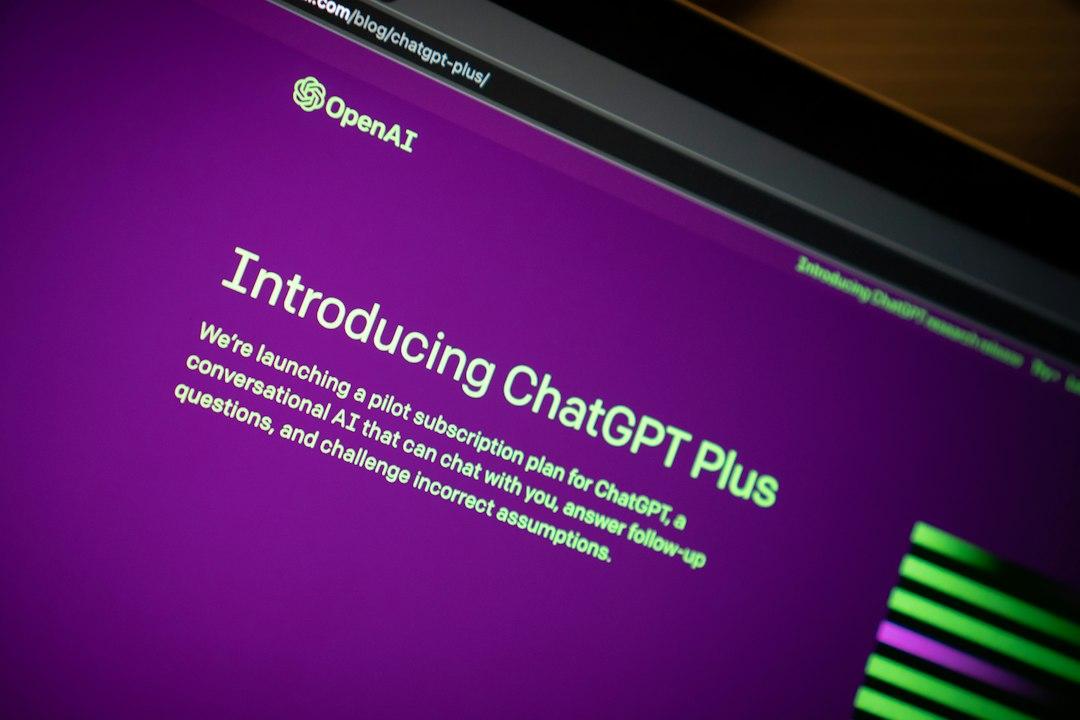
How to Rank in ChatGPT: How to Actually Get Cited in AI Answers
Bottom line: You don't "rank" in ChatGPT the way you rank on Google - there's no position #1 to win. Learning how to rank in ChatGPT really means getting cited: appearing as a linked source inside answers. You earn that with crawlable pages indexed in Bing, answer-first passages, specific verifiable facts, and off-site brand mentions.
Here's the uncomfortable part most guides skip. ChatGPT's search layer leans heavily on Bing's index, not Google's - Seer Interactive found 87% of SearchGPT citations matched Bing's top organic results, versus 56% for Google. So your hard-won Google #1 can be invisible inside ChatGPT if Bing never indexed the page well. The ranking signals are related to classic SEO, but the pipeline is different, and that gap is where most brands quietly lose.
Key Takeaways:
- —There is no ranking position in ChatGPT - the metric is citation frequency across a defined set of prompts, not a single SERP slot.
- —ChatGPT's search tool retrieves candidates from a Bing-powered index, so a page that's weak or unindexed in Bing rarely gets cited, even if it ranks on Google.
- —Pages get cited when a self-contained passage answers the sub-query directly, backed by specific data, named entities, and corroborating off-site mentions.
- —A large share of AI citations come from pages that don't rank in the top 10 for the original query - Ahrefs found only ~12% of AI-cited URLs sit in Google's top 10 - because fan-out sub-queries reward narrow, specific coverage.
- —You verify citation by tracking how often your domain appears across a repeated prompt set, since AI answers are non-deterministic and single checks mislead.
What Does It Actually Mean to "Rank" in ChatGPT?
Forget position. When someone asks ChatGPT a question and it runs a web search, it returns an answer with a handful of linked sources - usually three to eight. Those links are the prize. There's no second page, no "position 4," no rank tracker that returns a clean integer. You're either cited in that answer or you're not, and whether you're cited shifts from prompt to prompt and even from run to run.
That reframes the whole goal. The right question isn't "how do I rank #1," it's "across the 50 prompts my buyers actually type, how often does my domain show up as a source?" That number - citation share, or share of voice - is what you move. We cover the measurement side in depth in our guide to tracking your brand's AI citation share over time, but the mental shift matters first: you're optimizing a frequency, not a slot.
One more thing to get straight. Most ChatGPT conversations never trigger a web search at all - the model answers from training data, with no citations. Citations only appear when the search tool fires, which it does for queries that need current, specific, or local information. Optimizing for citation means optimizing for the moments retrieval happens.
How Does ChatGPT Choose Which Pages to Cite?
Picture the pipeline, because the tactics fall out of it. When ChatGPT decides to search, it doesn't send your exact prompt to one index. It decomposes the question into several narrower sub-queries, sends those to its Bing-powered retrieval layer, gets back candidate pages for each, reads a subset, and then cites the few passages that best answer each sub-query.

Three consequences follow, and they're where most sites leak visibility:
- Bing is the gatekeeper, not Google. If a page is blocked, unindexed, or buried in Bing, it won't enter the candidate set - full stop. Bing Webmaster Tools and IndexNow matter far more than most SEOs treat them.
- The crawler has to be allowed. OpenAI's search index is built by a specific bot, OAI-SearchBot. Per OpenAI's own crawler documentation, blocking OAI-SearchBot in robots.txt removes your site from ChatGPT search results - independent of your training-data (GPTBot) choice. Plenty of sites accidentally disallow it and wonder why they're invisible.
- Specificity beats authority ranking. Because the engine answers sub-queries, a narrowly focused page can out-cite a broad "ultimate guide." That's why Ahrefs found only around 12% of AI-cited URLs rank in Google's top 10 for the original prompt - the citations are coming from pages that nail a specific angle, not the pages that dominate the headline keyword.
A caveat worth keeping honest: the Bing-dependency finding comes from a specific study window, and other analyses (Ahrefs, TryProfound) show the overlap drifting over time. Treat Bing visibility as necessary insurance, not a permanent law. The one durable truth is that ChatGPT retrieves passages, then picks the clearest, most specific, most corroborated ones.
How Do You Get a Page Cited in ChatGPT? (The Reproducible Method)
This is the part competitors hand-wave. Below is the exact method we run when a client's pages are indexed but never cited - the passage structure, the entity signals, and the source pattern ChatGPT's retrieval tends to favor, followed by a real before/after.

What Passage Structure Does ChatGPT's Retrieval Favor?
Retrieval doesn't lift your page. It lifts a passage - a chunk of a few sentences. So the unit of optimization is the passage, and the pattern that wins is boringly consistent:
- Lead with the direct answer. The first sentence under a heading should answer the sub-query in plain terms, in roughly the first 40-60 words, before any context or throat-clearing.
- Make the passage self-contained. It should make sense lifted out of the page with zero surrounding context - no "as mentioned above," no pronouns pointing elsewhere.
- Match the heading to the question. Phrase the H2/H3 as the literal question a person asks, so the sub-query and your heading line up.
- Follow the answer with one specific fact. A number with a date, a named tool, a concrete threshold. Vague prose gets skimmed; a specific claim gets quoted.
- Keep sentences parseable. Short declarative sentences chunk cleanly. Long, clause-stacked sentences get split or dropped mid-thought.
We go deeper on the writing side in how to make your content citation-worthy for ChatGPT, but those five moves are 80% of it.
What Entity Signals Make a Page Cite-Worthy?
Retrieval systems trust pages they can resolve to known things - companies, people, products, places. Strengthen the entities on the page and you raise the odds your passage is selected over an equally relevant but anonymous one.
- —Name entities explicitly and consistently. Use the full product name, the author's real name, the company - don't hide behind "we" and "the platform" on a page you want cited for a brand query.
- —Add author and organization context. A visible byline with credentials and an
Organization/Personschema block gives the engine something to verify. Byline signals are a real factor - see our breakdown of the author-authority signals AI engines verify. - —Corroborate off-site. This is the one SEOs underweight most. If independent sources - reviews, directories, editorial mentions, Reddit threads - describe your brand the same way your page does, the engine treats the claim as trustworthy. Citations are earned partly off your own domain.
Before and After: A Page That Went From Invisible to Cited
Here's an anonymized example from a recent audit of a growth-stage SaaS site (details generalized, client not named - the engagement is in our case studies). The page targeted a "best [category] tool for [use case]" style query. It was indexed in Bing and ranked respectably on Google, yet never appeared in ChatGPT answers. We changed the passage, not the whole page.
| Attribute | Before (invisible) | After (cited) |
|---|---|---|
| Opening under the H2 | 90-word scene-setting paragraph before any answer | Direct answer in the first ~45 words |
| Heading phrasing | "Our Approach to [Category]" | "What's the best [category] tool for [use case]?" |
| Specificity | "helps teams save time" | named integration, a concrete limit, and a dated benchmark |
| Entity clarity | "the platform," "we" | full product + company name, visible author byline |
| Off-site corroboration | one directory listing | three independent mentions describing the same use case |
| Schema | Article only | Article + FAQPage + Organization |
The page's Google position barely moved. What changed was citation: within a few weeks of re-crawl, the passage started appearing as a linked source for the target prompt and several close variants. Nothing here is exotic. It's the method applied to one passage at a time.
How Do You Verify You're Actually Getting Cited?
Checking once and declaring victory is the most common measurement mistake. AI answers are non-deterministic - the same prompt can cite different sources on two runs - so a single screenshot proves almost nothing. You need a repeated, structured check across a fixed prompt set.
The reliable approach is to define 30-50 buyer prompts, run them on a schedule, and log how often your domain appears as a cited source and in what position within the answer. That trend line - not any single result - tells you whether the method is working. You can automate this with SEO Magics' AI Citation Tracker, which samples a prompt set over time so you're reading a trend instead of a lucky run, and cross-check whether a specific query even pulls an AI answer with the AI Overview Checker. Pair that with AI referral tracking in GA4 - the mechanics are in our guide to seeing ChatGPT, Perplexity and Gemini referrals in GA4 - and you have both the visibility signal and the traffic signal.
How Long Does It Take to Get Cited in ChatGPT?
No honest answer is a single number, because it depends on whether your bottleneck is indexing, structure, or authority. Here's the realistic sequence we see on retainer engagements:

| Stage | What's happening | Rough timeline |
|---|---|---|
| Crawl + Bing indexing | Fix robots.txt, confirm OAI-SearchBot access, get pages into Bing | Days to ~2 weeks after changes |
| Passage restructuring takes hold | Re-crawl picks up answer-first passages and schema | 2-6 weeks |
| Citation share climbs | Off-site corroboration and entity signals compound | 1-3 months |
| Durable share of voice | Consistent citations across the prompt set | 3-6+ months |
These are directional, not guarantees - anyone promising a fixed date is selling you something. The variable that moves the timeline most is off-site authority, which is the slowest lever and the one you can't fully control.
What Should You Fix First? A Prioritized Checklist
Start where the leverage is highest. Running these in order avoids the classic mistake of polishing passages on a page Bing can't even see.
- Confirm crawler access. Make sure OAI-SearchBot isn't blocked in robots.txt, and that key pages return clean 200s to it.
- Get indexed in Bing. Verify the site in Bing Webmaster Tools and submit via IndexNow; this is table stakes for ChatGPT search.
- Rewrite the opening passage of each target page to lead with a self-contained, 40-60-word direct answer.
- Convert headings to questions that mirror how buyers phrase the prompt.
- Inject one specific, dated, sourced fact per key passage - replace vague benefit claims.
- Tighten entity signals: full names, visible author,
Organization/Person/FAQPageschema. - Earn off-site corroboration - reviews, directories, editorial mentions that echo your positioning.
- Stand up citation tracking before you call anything done.
For the broader playbook on getting recommended, our ChatGPT SEO guide and our AI SEO service go further than a single article can.
How We Assessed This
This article reflects how we run GEO (Generative Engine Optimization) audits on growth-stage sites, not a theoretical model. The passage, entity, and source patterns above come from auditing client pages that were indexed yet uncited, isolating what changed when a page started appearing in ChatGPT answers, and watching citation behavior shift across repeated prompt runs over 12-month optimization cycles. For the external claims, we lean on named public research - Seer Interactive's Bing-overlap analysis and Ahrefs' AI-citation overlap study - and on OpenAI's own crawler documentation rather than secondhand summaries, and we flag where those findings disagree or reflect a specific time window. Our tooling for the measurement side is our AI Citation Tracker and AI Overview Checker, cross-referenced with Bing Webmaster Tools, GA4 referral data, and standard crawl tooling. Where we couldn't verify a number against a real source, we've kept the claim qualitative on purpose - in this field, a fabricated statistic is a liability, not a flourish.
Frequently Asked Questions
Can you pay to rank or get cited in ChatGPT?
No. There's no paid placement in ChatGPT's organic citations, and no position to buy. OpenAI has begun testing ads in some surfaces, but cited sources inside answers are earned through retrieval, not purchased. Anyone offering guaranteed ChatGPT rankings for a fee is misrepresenting how the system works.
Does my Google ranking help me get cited in ChatGPT?
Indirectly, and less than you'd expect. ChatGPT's search leans on a Bing-powered index, so strong Google rankings don't automatically carry over. Ahrefs found only about 12% of AI-cited URLs rank in Google's top 10 for the original query. Good SEO fundamentals help, but Bing indexing and passage structure matter more here.
Do I need schema markup to get cited in ChatGPT?
Schema isn't strictly required, but it helps the engine resolve entities and parse answers. FAQPage, Article, and Organization/Person markup give retrieval something verifiable to attach to. Think of it as reducing ambiguity, not as a magic switch - the passage content and off-site corroboration do the heavier lifting.
How is ChatGPT citation different from a Google featured snippet?
A featured snippet is one answer pulled onto one SERP. ChatGPT citation is a frequency across many non-deterministic answers, drawn from a Bing-based retrieval layer that decomposes your query into sub-queries. Winning snippets is useful table stakes; winning citations is a separate, broader game measured over a prompt set.
How many pages or mentions do I need to start getting cited?
There's no threshold count. One well-structured, well-corroborated passage on an indexed page can get cited for a specific query, while a hundred thin pages get nothing. Depth and specificity on the prompts your buyers actually type beat volume every time.
Why did my ChatGPT citation disappear?
AI answers are non-deterministic and the index refreshes, so citations come and go run to run. A drop can mean a competitor published a sharper passage, your page fell in Bing, or the engine simply sampled differently. That's exactly why you track a trend across a prompt set rather than reacting to a single answer.
Get Your Pages Cited, Not Just Ranked
If your content ranks on Google but never shows up inside ChatGPT answers, the gap is almost always fixable - and usually faster than earning a new #1. Start with the free SEO audit tool to spot the technical blockers, or book a strategy call and we'll map which of your pages are closest to getting cited and what to change first. SEO Magics is an AI-native SEO agency focused on getting growth-stage brands cited across ChatGPT, Perplexity, and Google AI Overviews - not just ranked on blue links.