SEO for Construction Companies: Project Pages That Win Commercial Bids
Most construction sites we audit treat every project the same way: a hero photo, a one-line caption, and a "Get a Free Quote" button. That layout converts a homeowner looking for a kitchen remodel.

SEO for Construction Companies: Project Pages That Win Commercial Bids
Bottom line: SEO for construction companies wins commercial bids when project pages are built for procurement, not homeowners. Buyers shortlist contractors by scope, sector, location, and verifiable outcomes before any RFP goes out. Pages that surface those fields - plus a complete Google Business Profile and real references - get you onto the bid list. Galleries and "free quote" buttons do not.
Most construction sites we audit treat every project the same way: a hero photo, a one-line caption, and a "Get a Free Quote" button. That layout converts a homeowner looking for a kitchen remodel. It does almost nothing for a facilities director vetting general contractors for a $4M warehouse fit-out - because that buyer is scanning for scope, sector fit, compliance, and a reference they can call. When the page doesn't answer those questions, you never make the shortlist, and you never find out why.
Key Takeaways:
- —Commercial buyers shortlist by scope, sector, location, and proof before sending an RFP - your project pages are the pre-qualification, not a brochure.
- —The same project page can be built to attract commercial inquiries or residential leads; the fields you include (and omit) decide which.
- —Local still dominates: Google is where 83% of consumers read business reviews, so a complete, review-backed Google Business Profile is a bid-eligibility signal, not a nice-to-have.
- —Paid lead channels are expensive and rented - contractor Local Services Ads average around $53 per lead; organic project pages compound and reduce that dependence.
- —AI search now summarizes "best commercial contractor in [city]" queries by lifting structured, specific pages - thin galleries get skipped entirely.
What does SEO for construction companies actually win you?
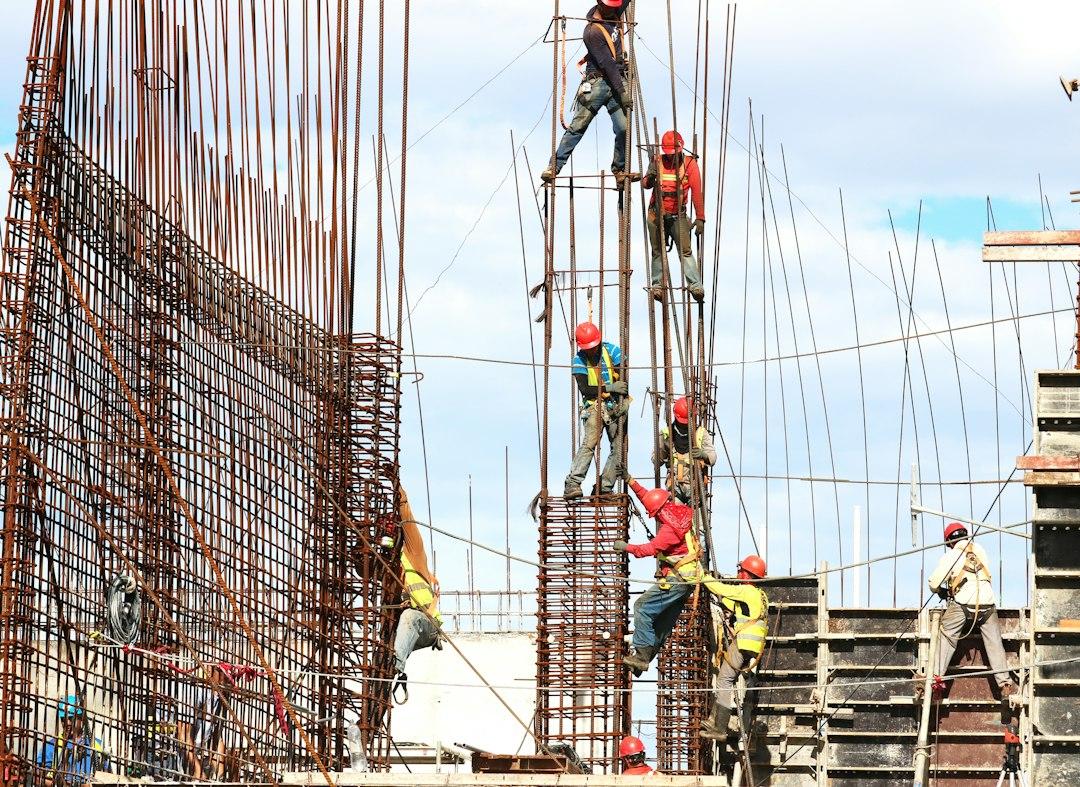
Think of ranking as pre-qualification. A commercial buyer - a developer, a procurement lead, a facilities manager - rarely cold-calls. They search "commercial general contractor [city]," "[sector] construction company near me," or "tilt-up warehouse contractor," then they build a shortlist from what they can verify in ten minutes. SEO decides whether you exist in that ten-minute window.
For construction, that visibility is overwhelmingly local and sector-specific. The work is tied to a geography and a building type, which is exactly why generic "construction" keywords are the wrong target. You want the intersection: service + sector + location. That's where the qualified, high-contract-value searches live, and it's where competition is thinnest.
The payoff is leverage over your lead economics. Paid channels are a meter running against you - PipelineOn's 2026 benchmark, built on SearchLight Digital data across 888 contractors, puts Local Services Ads at about $53 per lead and a 43.9% book rate. Useful, but rented. A project page that ranks keeps producing inquiries with no cost per click, and it does the one thing an ad can't: prove you've done the exact job the buyer needs done.
Why do most construction websites lose commercial bids before the RFP?
Here's the pattern we see on nearly every construction audit: the portfolio is a grid of beautiful photos with no words. It's a lookbook, not a decision tool. Google can't tell a $200K residential addition from a $12M hospital wing, and neither can an AI Overview - so neither surfaces you for the commercial query.
The second failure is treating the homepage as the whole strategy. One page targeting "construction company [city]" can't rank for retail fit-outs, cold storage, tenant improvements, and civil work at the same time. Each of those is a distinct searcher with distinct intent. Without dedicated sector and project pages, you're invisible for everything except your own brand name.

The third - and most expensive - failure is mismatched signals. A commercial buyer lands on a project page and sees "Financing available!" and "Free in-home estimate." Those cues scream residential. They quietly disqualify you, because nothing on the page signals you operate at commercial scale, carry the right accreditations, or deliver on a procurement timeline. The page didn't lie; it just answered the wrong buyer's questions.
The project-page template: fields that win commercial bids vs fields that only attract homeowners

This is the core of it. A project page is a controllable instrument. Load it with the wrong fields and you get a pipeline of homeowners asking for free quotes. Load it with the right fields and you start showing up on procurement shortlists. Same photos - different data.
Below is the template we deploy on commercial contractor sites. The left column is what pulls commercial inquiries. The right column is what pulls residential leads (fine if that's your market - expensive if it isn't).
| Project-page field | Pulls COMMERCIAL inquiries | Pulls RESIDENTIAL leads |
|---|---|---|
| Scope | Contract value band ("$2M - $5M"), square footage, structural system | "Full remodel," room count |
| Sector | Building type + use (cold storage, ambulatory clinic, retail fit-out) | "Home," "kitchen," "bathroom" |
| Location | City + jurisdiction + permitting authority | "Serving [metro] area" |
| Delivery method | Design-build, CM-at-risk, GMP, tender route | Omitted entirely |
| Compliance / accreditation | OSHA record, LEED, trade licenses, bonding capacity | "Licensed & insured" |
| Client type + reference | "National logistics operator - reference available" | Homeowner first-name testimonial |
| Outcome | On-time/on-budget, sq ft delivered, downtime avoided | "They were so friendly!" |
| Photos | Phased, captioned, geotagged, with scale/context | Styled hero shots only |
| CTA | "Request a capability statement" / "Invite us to bid" | "Get your free quote" |
Read the two columns and the mechanism is obvious. The commercial column is full of the nouns a procurement search actually contains - building types, delivery methods, compliance terms - so the page can rank for and get cited on those queries. The residential column is emotional and price-led, which is correct for a homeowner and poison for a tender shortlist.
A worked example makes the difference concrete. A residential-framed page reads: "Beautiful new build in Riverside. Call for your free quote!" The commercial version of the same project reads: "42,000 sq ft tilt-up distribution center, Riverside, CA - design-build delivery, completed in 11 months, zero recordable incidents, LEED Silver. Reference available on request." The first attracts the wrong buyer cheaply. The second gets you invited to bid.
One caution on proof: never invent the outcome. If you don't have a quantified result yet, state what's true - the scope, the sector, the timeline, the compliance record - qualitatively. A verifiable "completed on schedule across three phases" beats a fabricated percentage every time, and in commercial procurement a single unverifiable claim gets the whole page thrown out.
How do you structure project pages that rank and convert?
Build each page as a repeatable template so your portfolio scales without turning into thin, duplicated content. The order matters - put the qualifying facts above the fold, where both the buyer and the AI summarizer read first.
- H1 with sector + location + scope. "Commercial Warehouse Construction in Riverside, CA - Design-Build GC." Specific beats clever.
- A one-paragraph project summary that front-loads scope, sector, delivery method, and outcome. This is the block an AI Overview lifts verbatim.
- A spec table - square footage, contract value band, timeline, delivery method, accreditations. AI engines preferentially cite tables.
- Phased, captioned photography with descriptive alt text ("steel erection, phase 2, Riverside distribution center"), not "IMG_4471."
- Outcome + reference line - honest, verifiable, with a named client type (not necessarily the client name).
- Sector internal links to your "[sector] construction" service page, so authority flows and the buyer can go deeper.
- A procurement CTA - "Invite us to bid" or "Request our capability statement," not "Free quote."
Add Project and Organization schema so engines can parse the structured facts, and interlink projects within the same sector to build topical depth. If you want this checked automatically before you publish, run the page through SEO Magics' free audit tool - it flags missing schema, thin content, and crawl issues that keep project galleries out of the index.
Which local SEO signals actually move you onto the bid list?
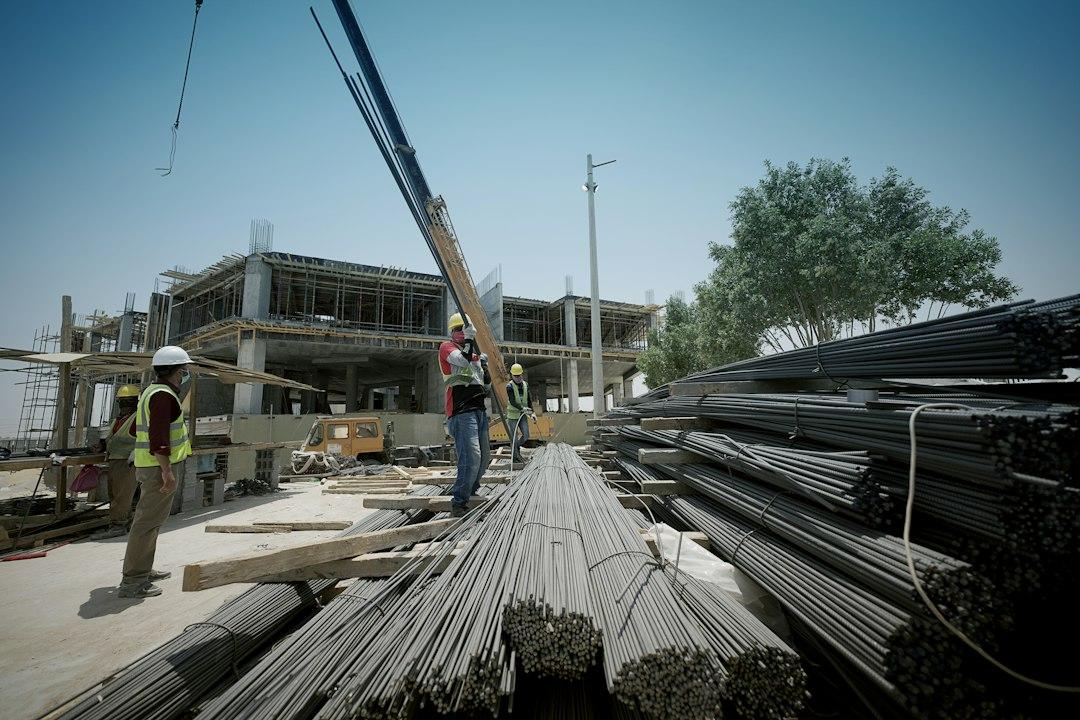
Commercial doesn't mean "ignore local." It means local done at a higher resolution. The buyer searching "commercial general contractor Phoenix" is still triggering a local pack, and the same signals that rank a plumber rank you - they just have to be backed by commercial proof. Reviews carry real weight here: BrightLocal's 2025 survey found Google is where 83% of consumers read reviews and 74% check at least two review sites before deciding. For a seven-figure contract, that scrutiny only intensifies.
| Local signal | Why it matters for commercial bids | Priority |
|---|---|---|
| Google Business Profile (complete, correct category) | First thing a buyer sees; feeds the map pack and AI local answers | High |
| NAP consistency across directories | Inconsistency erodes trust and splits ranking signals | High |
| Review volume + owner responses | Social proof at the scrutiny level a big contract demands | High |
| Sector + city service pages | Captures the "[sector] contractor [city]" intent directly | High |
| Localized project pages | Ties verifiable work to a geography | Medium-High |
| Local citations / trade directories | Reinforces entity and relevance | Medium |
If you're coming from a home-services background, the mechanics will feel familiar - we broke down the ranking-vs-paid tradeoff in our guide to winning local service queries without paying for every lead, and the fields that actually move the map pack apply directly. The commercial twist is simply that your proof bar is higher.
One more shift worth naming: AI search is now a real referral path for "best commercial contractor in [city]" style questions. Google is pushing inline links higher in AI Mode and AI Overviews (per Search Engine Journal), and those answers are assembled from structured, specific pages. Thin galleries don't get summarized. Spec tables and clear outcome statements do.
How much does construction SEO cost, and how long does it take?
Expect a 6-12 month horizon before project and sector pages compound into consistent commercial inquiries. SEO is a 12-month commitment, not a sprint - anyone promising bid-ready rankings in 30 days is selling you something. Local and sector pages can start producing in the 3-6 month range; competitive metro commercial terms take longer.
On cost, here's how SEO Magics' public plans map to construction firms (full detail on our pricing page):
| Plan | Price | Best fit for a construction firm |
|---|---|---|
| Foundation | $1,500/mo | Single-metro contractor; GBP + core service pages + a few project pages |
| Growth | $3,500/mo | Multi-sector or multi-metro firm building out sector pages + project library |
| AI Authority | $7,500/mo | Firms competing on high-value commercial terms wanting AI-search citation |
Those are the only plans we offer - no hidden "per extra project page" fees. As an AI-native agency, our wedge is getting construction firms cited inside ChatGPT, Perplexity, and Google AI Overviews, not just ranked on blue links. If you want that specifically scoped, our local SEO service is the usual starting point, and there's more depth across adjacent topics in the journal.
How We Assessed This
The project-page template and the commercial-vs-residential field split come from pattern analysis across construction and home-services sites we've audited, where the recurring failure is photo-grid portfolios with no structured, parseable facts. We cross-referenced that against how commercial procurement actually shortlists - scope, sector, location, delivery method, compliance, and references - and against how AI engines assemble local answers from structured pages. The recommendations lean on standard audit tooling: crawl and index checks (Screaming Frog, Google Search Console), SERP and keyword intent review (Ahrefs/Semrush), schema validation, and AI Overview citation checks. External figures in this article are cited to their sources - BrightLocal's 2025 review survey and PipelineOn's 2026 contractor benchmark - and we've deliberately avoided quoting unverifiable "SEO ROI" numbers that circulate in vendor blogs. Our retainer work runs on 12-month optimization cycles, because project-page authority compounds rather than spikes.
Frequently Asked Questions
What is SEO for construction companies?
It's the practice of structuring your website, project pages, and Google Business Profile so you appear when buyers search for a contractor by service, sector, and location. For commercial work specifically, it means building pages that answer procurement questions - scope, compliance, references - so you make the shortlist before an RFP is ever sent.
How is commercial construction SEO different from residential?
Residential search is emotional and price-led ("kitchen remodel near me," "free quote"). Commercial search is procurement-led - buyers look for building type, delivery method, accreditations, and verifiable references. The same project page can target either; the fields you include and the CTA you choose decide which buyer you attract.
How long does construction SEO take to produce bids?
Plan for 6-12 months before it compounds into steady commercial inquiries. Local and sector pages can start generating in 3-6 months; competitive metro commercial terms take longer. Treat any 30-day ranking promise as a red flag.
Do I still need Google Business Profile for commercial work?
Yes. Commercial buyers still trigger local packs and still read reviews - Google is where 83% of consumers check them. A complete, correctly categorized, review-backed profile is a bid-eligibility signal, not just a residential lead tool.
Can AI search actually send construction leads?
Increasingly, yes. Queries like "best commercial contractor in [city]" now produce AI summaries with inline links drawn from structured, specific pages. Spec tables, clear outcome statements, and schema get your pages lifted into those answers; thin photo galleries get skipped.
How many project pages should I build?
One per distinct sector-and-scope combination you want to win, not one per job. Group similar projects under a sector service page and interlink them. Depth beats volume - ten well-structured, verifiable project pages outperform fifty thin ones.
Get a second opinion on your project pages
If your portfolio is a grid of great photos that still isn't producing commercial inquiries, the problem is almost always the fields - not the photography. Drop your site into our free SEO audit tool to see which project pages are missing the schema, structure, and local signals that get you shortlisted. Want it scoped to your sectors and metros? Book a strategy call and we'll map the project-page build out with you.